CARF Crypto Reporting 2026: Where a Palau ID Fits
CARF collection started 1 January 2026. Exchanges report the tax residence you self-certify, not the country on your ID. Here is what a Palau ID changes.
We may earn a commission if you apply through this link. This site is independent and is not the official RNS.ID or Palau government site.
Key takeaways
- CARF crypto reporting is live. Forty-six jurisdictions began collecting data on 1 January 2026 and exchange it in 2027; another 29 follow by 2028, and the United States by 2029.
- The reported field is your jurisdiction of tax residence, not your ID's issuing country. Exchanges must obtain a self-certification stating tax residence and a tax identification number, then check it against what they already know about you from AML/KYC.
- Palau appears nowhere on the OECD's CARF commitment list, and its own 2026 Global Forum peer review states that Palau "has not signed any treaty with any jurisdiction providing for the exchange of information for tax purposes."
- That absence does not shield you. The report is filed where the exchange has its nexus and sent to where you are tax resident — Palau's status is irrelevant to both ends unless you genuinely live there.
- A self-certification you know to be wrong is penalised on you, not the platform. In the UK the figure is up to £300, and it is separate from any tax you owe.

The short answer: CARF follows tax residence, not your ID
A recurring question in our inbox goes roughly like this: if I verify my exchange account with a Palau ID, does the exchange report me to Palau instead of to my home country? It is an understandable question and the answer is no, and understanding why CARF crypto reporting works that way saves people from an expensive misunderstanding.
The stakes are concrete. Data collection under the Crypto-Asset Reporting Framework started on 1 January 2026 in 46 jurisdictions — the European Union under DAC8, plus the United Kingdom, Japan, Korea, Brazil and the rest — with the first automatic exchanges due in 2027. The information travels on one routing rule: the jurisdiction where you are tax resident.
We read the OECD's commitment list, the UAE Ministry of Finance's CARF guidance, HMRC's user-facing guidance and the Global Forum's January 2026 peer review of Palau, and we set out which field on your exchange account decides where your data goes — and where a Palau ID does help, because it does. None of this is tax advice, and where a source is silent we say so instead of filling the gap.
What CARF is, and the dates that already passed
The Crypto-Asset Reporting Framework extends automatic tax information exchange to crypto. It works like the Common Reporting Standard that already covers bank accounts: platforms collect standardised information about their users, hand it to their own tax authority, and that authority forwards each user's data to the country where the user is tax resident. It compels crypto intermediaries — exchanges, brokers, some wallet providers — to report acquisitions, disposals and certain transfers.
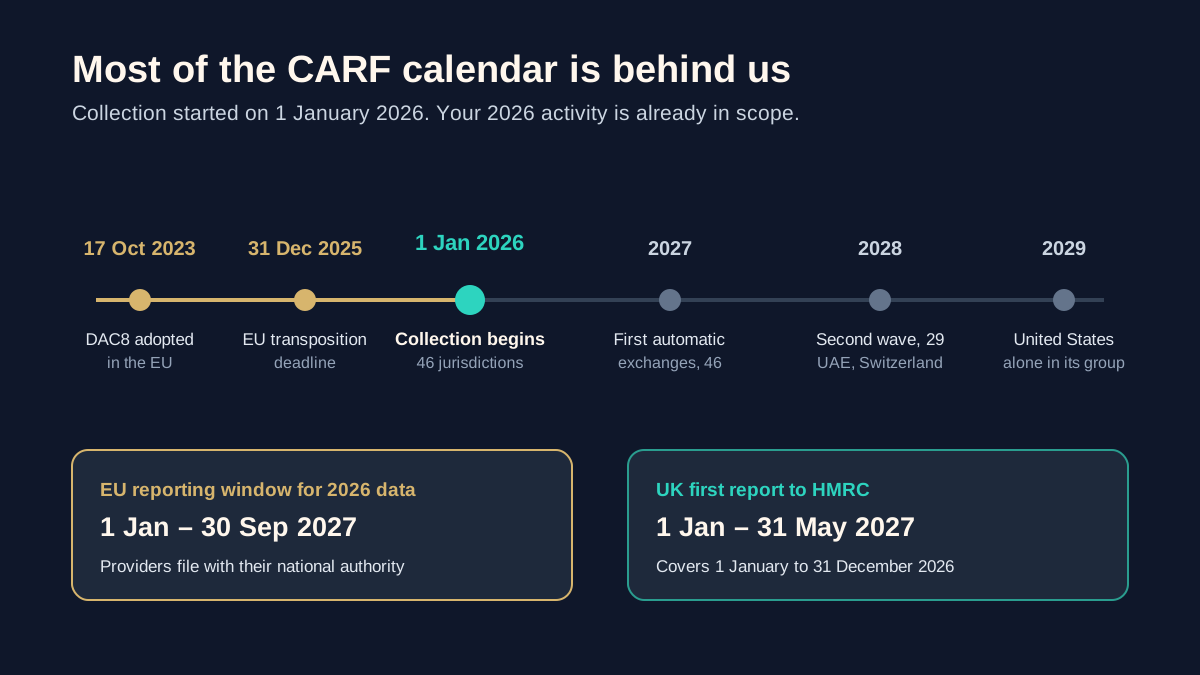
What matters for planning is the calendar, and most of it is behind us.
| Milestone | Date | What it means for you |
|---|---|---|
| DAC8 adopted in the EU | 17 October 2023 | EU-wide implementation of CARF via Council Directive (EU) 2023/2226 |
| EU transposition deadline | 31 December 2025 | Member states had to have the rules in national law |
| Collection begins in first-wave jurisdictions | 1 January 2026 | Your 2026 activity is already in scope |
| EU reporting window for 2026 data | 1 January – 30 September 2027 | Providers file with their national authority |
| UK first report to HMRC | 1 January – 31 May 2027 | Covers 1 January to 31 December 2026 |
| First automatic exchanges | 2027 | 46 jurisdictions |
| Second wave first exchanges | 2028 | 29 jurisdictions, including the UAE and Switzerland |
| United States first exchanges | 2029 | The only jurisdiction in its group |
If you opened or re-verified an exchange account this year and were asked for your tax residence and a tax number when you had never been asked before, that was CARF arriving. The request was not optional, and the answer you gave is the one being reported.
What your exchange has to collect, and what it reports
Two different things happen at verification, and conflating them is the root of the confusion. Your AML/KYC check establishes who you are. The CARF self-certification establishes where you are taxed. They run at the same moment, on the same screen, and they are not the same question.
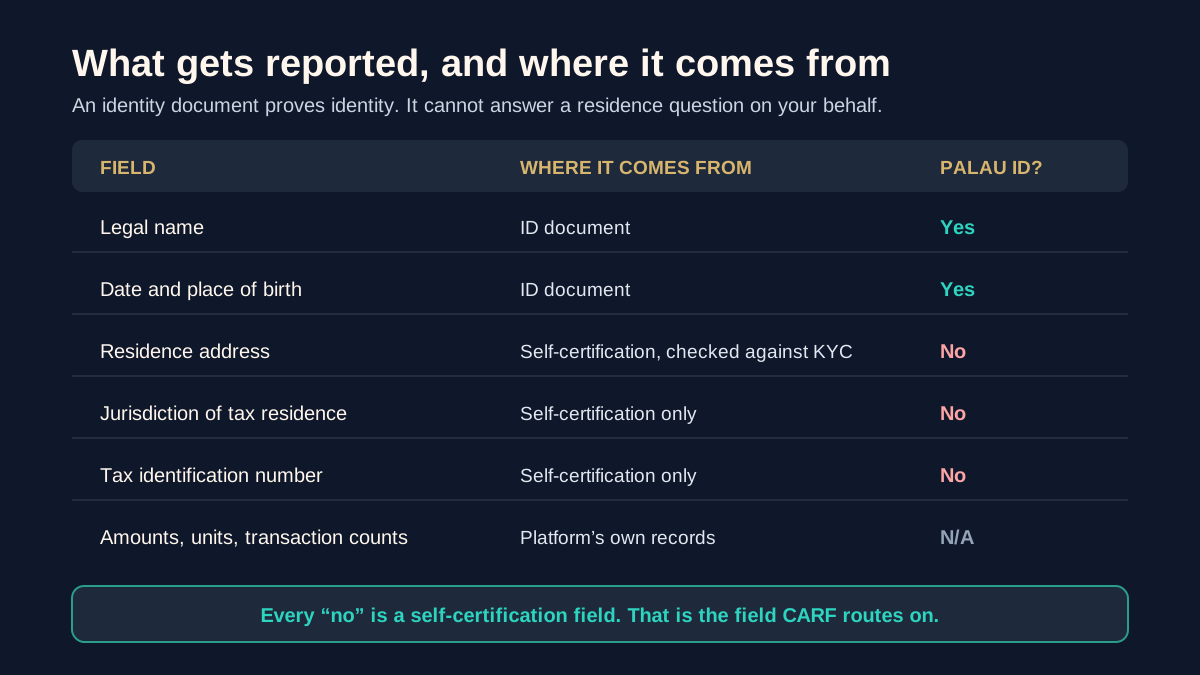
The UAE Ministry of Finance's public CARF overview sets out the reporting fields directly: providers must report "the name, address, jurisdiction(s) of residence, tax identification number(s), and date and place of birth (in the case of an individual) of each reportable user," plus, for each type of relevant crypto-asset, its full name, the aggregate gross amount paid and received, the number of units, and the number of transactions.
| Field | Where it comes from | Does a Palau ID supply it? |
|---|---|---|
| Legal name | ID document | Yes |
| Date and place of birth | ID document | Yes |
| Residence address | Self-certification, checked against AML/KYC records | No — your actual address |
| Jurisdiction(s) of tax residence | Self-certification only | No |
| Tax identification number | Self-certification only | No |
| Aggregate amounts, units, transaction counts | Platform's own records | Not applicable |
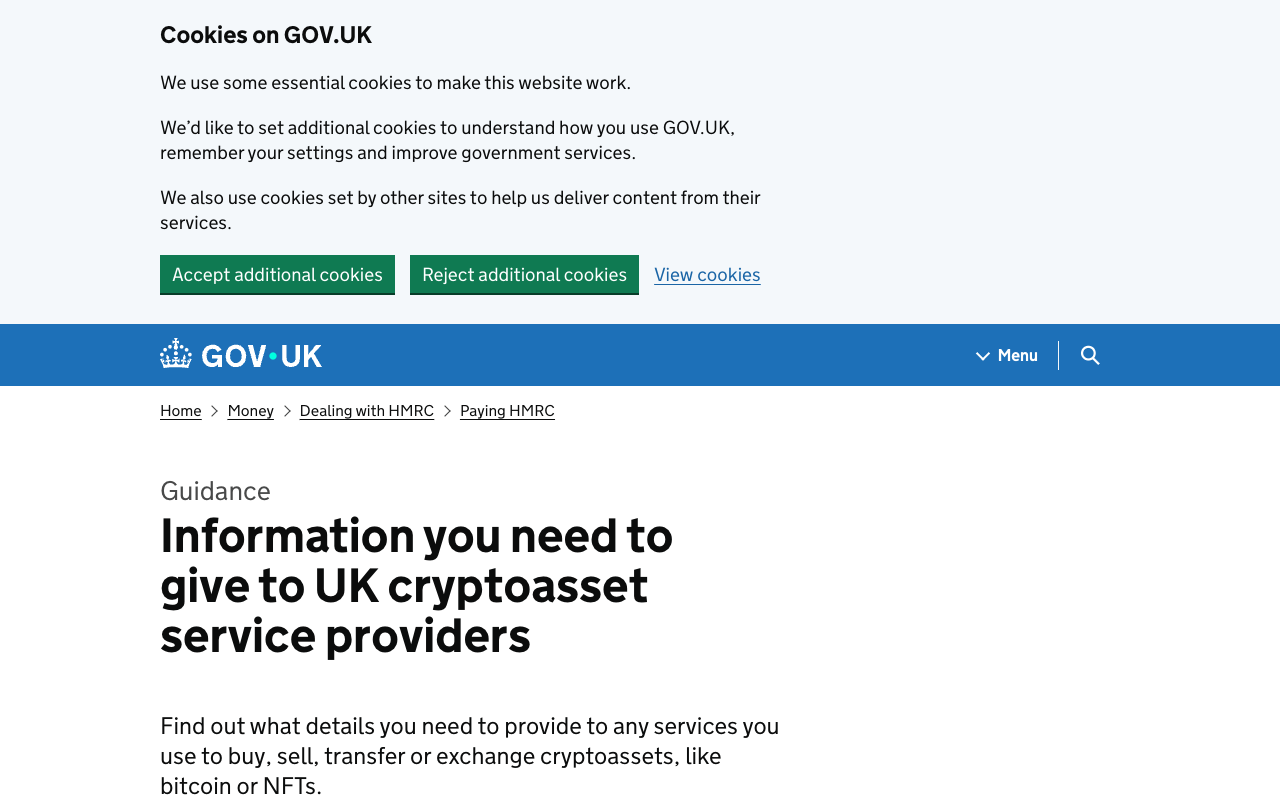
Look at where the "no" answers cluster. An identity document proves identity; it cannot answer a residence question on your behalf. The UK guidance is blunt about what an individual user has to hand over: full name, date of birth, the address and country where you normally live, and your tax identification number.
The provider then has to sanity-check what you wrote. Under the OECD model, a provider has confirmed the reasonableness of a self-certification if, on reviewing the information gathered when the relationship was established — including AML/KYC documentation — it "does not know or have reason to know that the self-certification is incorrect or unreliable." A Palau ID in the file alongside a self-certification naming a country you have never lived in is precisely the mismatch that test is designed to catch.
One threshold is worth knowing, because it is widely misread. For retail payment transactions, values exceeding USD 50,000 require the customer's details to be reported; below that, the transaction is treated as a transfer and the recipient — typically the merchant — is the party reported. That is a rule about merchant payments, not a general exemption for trades under USD 50,000.
Palau is not on the CARF list, and that helps less than it looks
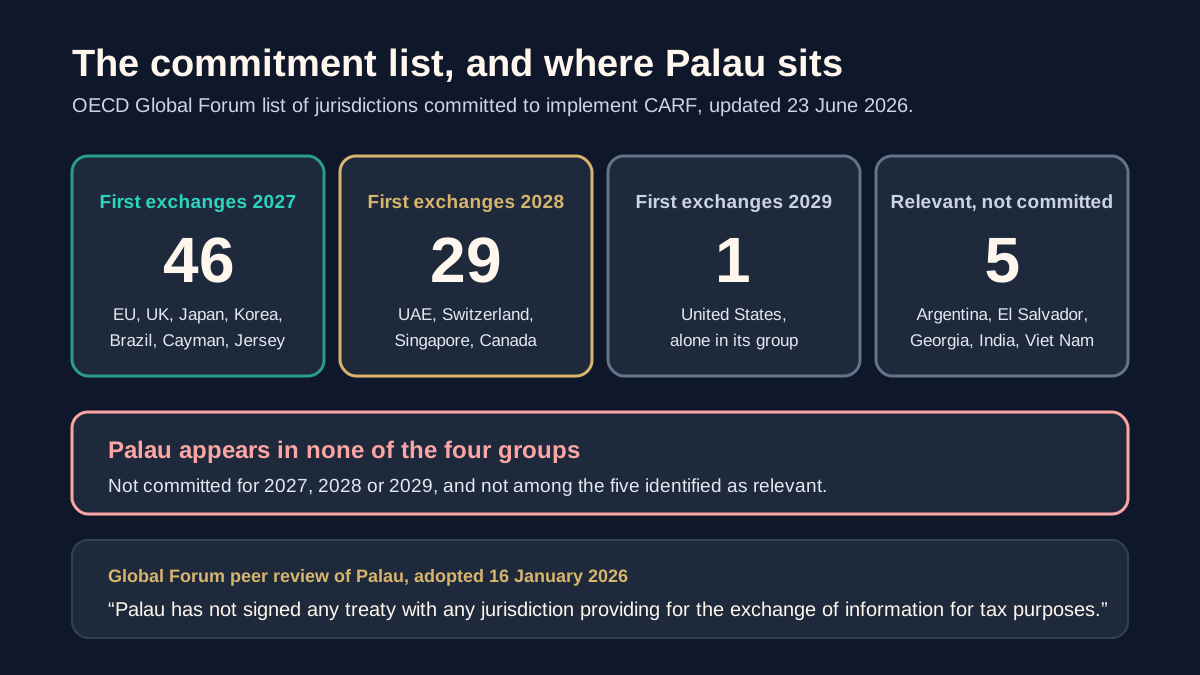
Now the part people actually came for. The Global Forum publishes the list of jurisdictions committed to CARF, last updated 23 June 2026. We read it in full.
| Group | Count | Examples |
|---|---|---|
| First exchanges by 2027 | 46 | All EU member states except Cyprus, United Kingdom, Japan, Korea, Brazil, New Zealand, South Africa, Cayman Islands, Jersey, Guernsey, Isle of Man |
| First exchanges by 2028 | 29 | UAE, Switzerland, Singapore, Canada, Australia, Hong Kong (China), Bahamas, BVI, Panama, Seychelles |
| First exchanges by 2029 | 1 | United States |
| Identified as relevant, not yet committed | 5 | Argentina, El Salvador, Georgia, India, Viet Nam |
Palau is in none of those groups. It is not even on the list of jurisdictions the Global Forum has identified as relevant to CARF and awaiting a commitment. Palau's own peer review, adopted by Global Forum members on 16 January 2026, goes further: "Palau has not signed any treaty with any jurisdiction providing for the exchange of information for tax purposes." The report notes that Palau joined the Global Forum in 2020, has never refused to enter an exchange agreement, and that one jurisdiction has approached it with negotiations underway.
So Palau really is outside the network. The reason that does nothing for your exchange account is structural. CARF reporting is triggered by the platform's nexus, not by your ID. The obligation attaches to a provider that is tax resident in, incorporated in, managed from, or has a regular place of business or branch in an implementing jurisdiction. Your Binance, Kraken or Bitpanda account sits inside that perimeter regardless of what card you uploaded, and the report then routes to your self-certified jurisdiction of tax residence. Palau is neither the sender nor the recipient in that chain unless you genuinely live there.
Palau's absence would only matter if the exchange were Palauan and so were you. Our Palau digital residency limitations page covers the wider version of this pattern — a real fact about Palau that does not transfer to your circumstances.
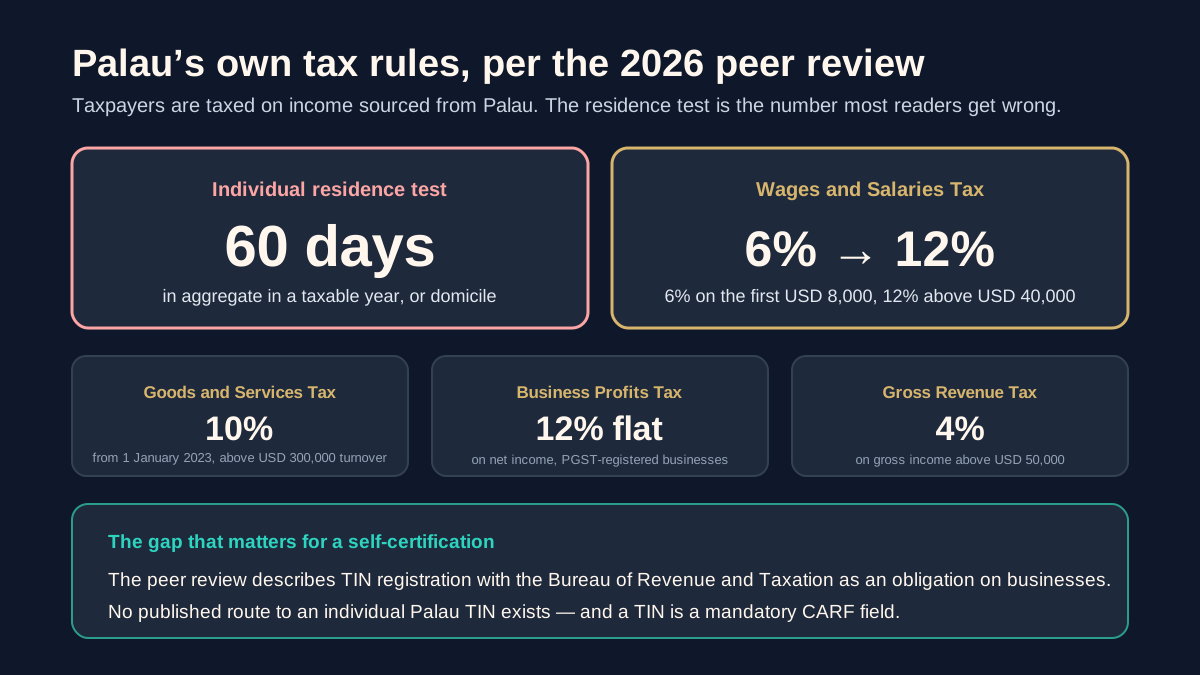
Palau's own tax rules, according to the OECD's 2026 review
RNS states in its FAQ that there is 0% Palau tax on non-Palauan income for digital residents, alongside 0% income tax and 0% capital gains language. That is consistent with what the Global Forum found, and it is narrower than it sounds.
| Rule | What the Global Forum peer review records |
|---|---|
| Basis of taxation | Taxpayers are taxed on income sourced from Palau |
| Individual residence test | Domiciled in Palau, or residing there more than 60 days in aggregate in a taxable year |
| Wages and Salaries Tax | 6% on the first USD 8,000, rising to 12% above USD 40,000 |
| Palau Goods and Services Tax | 10%, introduced 1 January 2023, for businesses above USD 300,000 turnover holding a FIAC |
| Business Profits Tax | 12% flat on net income for PGST-registered businesses |
| Gross Revenue Tax | 4% on gross income for businesses earning over USD 50,000 |
| Non-resident tax | 10% on interest, royalties and technical fees; 5% on insurance premiums |
| Dividends | Exempt under section 1433, with no requirement to report or identify recipients |
| Tax identification numbers | Businesses must register with the Bureau of Revenue and Taxation and apply for a TIN |
Two details deserve a second look. First, Palau's individual residence threshold is 60 days, not 183 — far lower than most readers assume, and directly relevant if you were considering a long stay. Our Palau visa extension guide explains why the length of stay you can actually get is itself contested.
Second, the peer review describes TIN registration as a step for businesses. We found no published mechanism by which a digital resident is issued a Palau individual tax identification number, and RNS does not claim one exists. Since the TIN is a mandatory CARF self-certification field, that gap matters: there is no Palau number to give even if Palau were the honest answer. Palau digital residency tax and Palau crypto tax go through the rest of this ground.
Where a Palau ID genuinely helps, and where it does not
None of the above makes the ID useless. It makes it useful for a different job than the one people hope.
| What you might want | Does a Palau ID do it? | Why |
|---|---|---|
| Pass an identity check at an exchange | Sometimes | RNS describes it as a government-issued ID; each platform decides its own accepted-document list |
| Change which country receives your CARF report | No | Routing follows self-certified tax residence |
| Serve as your tax identification number | No | It is an identity document; no individual Palau TIN is published |
| Prove your residence address | No | Address proof is a separate document with its own rules |
| Make you a Palau tax resident | No | That requires domicile or more than 60 days a year in Palau |
| Remove a home-country filing duty | No | Your own country's rules and tie-breakers still apply |
For the first row — actual acceptance at actual platforms — Palau ID for crypto KYC and Palau ID supported exchanges are the pages to read, because acceptance varies by platform and changes without notice. If you are still deciding whether to apply at all, start here is the honest entry point, and the affiliate disclosure at the top of this page applies: we may earn a commission if you apply through our link, and we are not RNS.ID or the Palau government.
Getting the self-certification wrong is its own penalty
This is the section to read twice. Under the UK regulations, HMRC's guidance to users states: "If you give inaccurate details or do not give details to a UK service provider, you could get a penalty of up to £300." For a non-UK provider, it warns, the penalty could be higher.
The UAE consultation document sets out an equivalent design on the CRS model it will follow: an administrative penalty of AED 20,000 for inaccurate or incorrect information in a self-certification where the person submitting it should have known it was wrong, with separate and much larger penalties on the reporting institution.
Three things follow.
- The penalty for a false self-certification lands on the person who signed it, not on the exchange.
- It is independent of tax owed. You can be penalised for the certification and separately assessed for the tax.
- Correcting the record is cheaper than defending it. An update is a normal administrative act.
If your tax residence genuinely changed — you moved, you broke residence properly, you have advice confirming it — say so and give the new jurisdiction's TIN. That is the mechanism working as intended. The failure mode is naming a jurisdiction you are not actually taxed in because it appears on a card you bought.
What to confirm before your next exchange verification
| Check | Where | Why it matters |
|---|---|---|
| Which jurisdiction you are tax resident in this year | A qualified adviser in your own country | It is the field CARF reports on |
| Your TIN for that jurisdiction | Your national tax authority | Mandatory self-certification field where one is issued |
| Whether your provider's jurisdiction is first-wave | OECD commitment list | Decides whether 2026 data is already in scope |
| What you told the exchange previously | Your account's tax settings | An outdated answer is still the reported answer |
| Whether the Palau ID is on the platform's accepted list | The platform's own help centre | Acceptance is per-platform and changes |
| Your address proof, separately | The platform's requirements | An ID does not answer an address question |
Ask your provider in writing if their tax-residence prompt is unclear, and keep the reply. A support ticket with a timestamp is worth more than any guide, this one included.
Bottom line
CARF crypto reporting began collecting on 1 January 2026 across 46 jurisdictions, with 29 more by 2028 and the United States by 2029. The routing field is your self-certified jurisdiction of tax residence, cross-checked against the AML/KYC file the platform already holds. Palau is outside that network entirely — no CARF commitment, and by the Global Forum's own January 2026 finding, no tax information exchange treaty with anyone — and none of that changes what your exchange reports about you.
Judge the ID on identity, which is what it is. It is not a tax instrument, not a citizenship path, and not a passport. Treat any pitch that frames a Palau ID as a way to change where your crypto data goes as a reason to close the tab.
Related reading
- Palau digital residency tax guide
- Palau crypto tax for digital residents
- Palau ID for crypto KYC
- Palau digital residency limitations
- Palau ID supported exchanges
- Is RNS.ID legit?
FAQ
What is CARF and when did it start?
CARF is the OECD's Crypto-Asset Reporting Framework, which extends automatic exchange of tax information to crypto platforms. Forty-six jurisdictions began collecting data on 1 January 2026 and will exchange it in 2027, 29 more start exchanges by 2028, and the United States by 2029. In the EU it is implemented through DAC8, Council Directive (EU) 2023/2226.
Does a Palau ID change which country my exchange reports me to?
No. CARF reporting routes on the jurisdiction of tax residence you self-certify, cross-checked against the platform's AML/KYC information. An identity document establishes who you are, not where you are taxed. The obligation also attaches to the platform's own jurisdiction, which does not change based on your ID.
Is Palau part of CARF?
No. Palau does not appear on the OECD Global Forum's list of jurisdictions committed to implement CARF, dated 23 June 2026, in any of the 2027, 2028 or 2029 groups, nor among the five jurisdictions identified as relevant but not yet committed. Palau joined the Global Forum in 2020 and its January 2026 peer review states it has signed no tax information exchange treaty with any jurisdiction.
What information does my exchange have to report about me?
For each reportable user: name, address, jurisdiction or jurisdictions of residence, tax identification numbers, and date and place of birth. For each relevant crypto-asset, its full name, the aggregate gross amounts paid and received, the number of units, and the number of transactions. That is the reporting standard set out in the OECD rules and reproduced in national guidance.
Can I be penalised for what I put on a self-certification?
Yes. HMRC's guidance to users states that giving inaccurate details, or no details, to a UK cryptoasset service provider can attract a penalty of up to £300, and warns the penalty could be higher with a non-UK provider. The UAE's CRS-model framework carries an AED 20,000 penalty for inaccurate self-certification information the submitter should have known was wrong.
Does holding a Palau ID make me a Palau tax resident?
No, and RNS does not claim it does. According to the Global Forum's 2026 peer review, an individual is deemed resident in Palau when domiciled there or residing there for more than 60 days in aggregate in a taxable year. Holding an identity document is not either of those things.
Does a Palau ID give me a tax identification number?
Not as far as any published source shows. The Global Forum peer review describes TIN registration with the Bureau of Revenue and Taxation as an obligation on businesses, and we found no published route to an individual Palau TIN for digital residents. Since a TIN is a required self-certification field, that gap is material.
What about US exchanges, since the US is not in CARF until 2029?
US brokers are already reporting separately. Gross proceeds from digital asset sales effected on or after 1 January 2025 are reported to the IRS on Form 1099-DA, with the first payee statements furnished in early 2026. A US-facing platform reporting to the IRS is a domestic regime that runs independently of the CARF timetable.